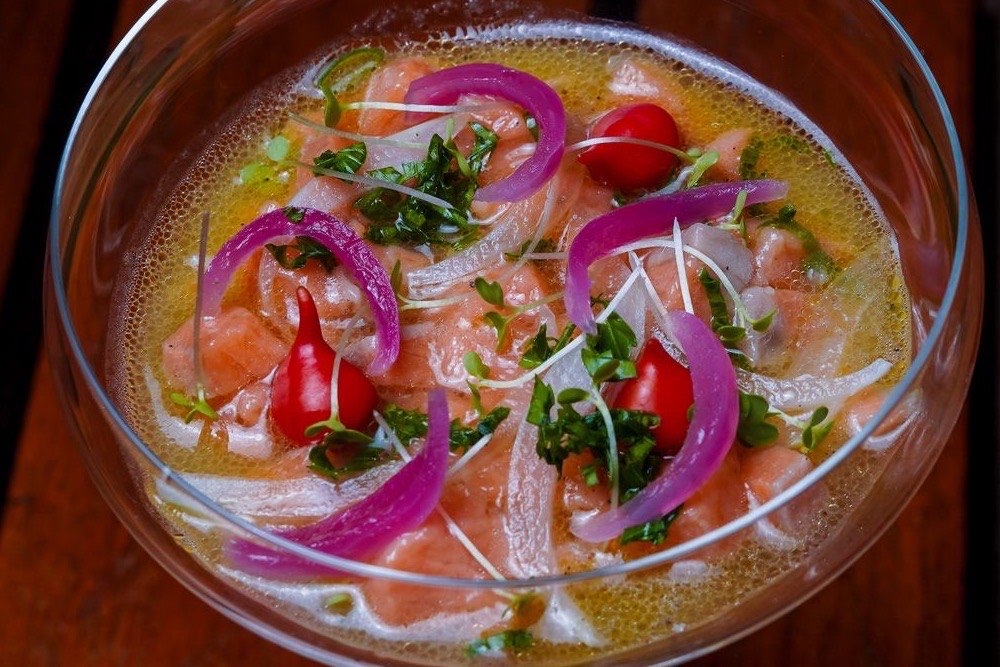
Kinilaw - fresh, no-nonsense, surprisingly complex. You're the friend who can fix anything, stays cool under pressure, and doesn't waste time on drama. You speak in actions, not words. Underestimated? Always. Capable? Absolutely.
You're the person everyone calls when something's broken - physically or logically. You understand how things work, spot problems others miss, and solve them with elegant efficiency. You don't need meetings or team-building exercises. Give you a problem and space to work, and you'll handle it. Drama? Pass. Action? Let's go.
Your strength is calm competence in the face of chaos. Your weakness? Sometimes you're so independent, people think you don't care. You do - you just show it differently. Not everyone speaks your language of practical help over emotional words. Balance the doing with occasionally saying. People need to hear you care, not just see it in your actions.
Kinilaw is the Filipino version of ceviche — fresh raw fish "cooked" in vinegar or citrus juice (typically calamansi), mixed with onions, ginger, chili peppers, and coconut milk. Originating from the Visayas region, Kinilaw predates the arrival of any foreign influence, making it one of the most authentically Filipino preparations. The dish requires the freshest catch and precise technique — too much acid and the fish becomes tough; too little and it stays raw.
The ISTP personality type — known as The Virtuoso or The Craftsman — combines Introversion, Sensing, Thinking, and Perceiving. ISTPs are practical, observant individuals who understand how things work through hands-on exploration. They are calm under pressure, preferring to analyze situations quietly before taking decisive action. ISTPs are natural troubleshooters with an innate mechanical aptitude, able to diagnose and fix problems with elegant efficiency. Their independence and self-reliance are defining traits — they prefer to figure things out on their own rather than follow someone else's instructions.
Core Strengths: Exceptional practical intelligence and mastery of tools and systems, calm and effective under pressure that would rattle most people, an analytical precision that gets to root causes quickly, genuine independence, and the rare ability to act decisively without overthinking.
Growth Areas: Can be emotionally distant in ways that confuse people who care about them, tendency toward stubbornness when challenged on technical matters, sometimes prioritizes solving problems over connecting with the people involved in them, can struggle with long-term relational commitment, and restlessness that makes sustained routine feel like a slow prison.
ISTP stands for Introverted, Sensing, Thinking, and Perceiving. Known as "The Virtuoso" or "The Craftsman," ISTPs are masters of practical skills who learn best by taking things apart and putting them back together. They make up about 4-6% of the population and are often found wherever there's something complex to analyze, fix, or build — engines, code, systems, or physical structures.
Kinilaw — raw fish or seafood "cooked" in vinegar and citrus with minimal processing — is the most honest, direct, skill-dependent dish in Filipino cuisine. There's nowhere to hide imprecision: the freshness of ingredients, the precision of the acid ratio, and the timing are everything. Like the ISTP, Kinilaw doesn't dress itself up or rely on elaborate technique for its own sake. It lets quality and precision speak. The result is pure and clean.
ISTPs thrive in technical, hands-on environments where they can analyze, fix, or build real things. Top career paths: mechanical and electrical engineering, software development, emergency medical services, military (especially special operations and technical roles), skilled trades (electrician, machinist, carpenter), forensic investigation, aviation, competitive motorsports, and systems administration. They need work with tangible, immediate feedback.
ISTPs genuinely care about the people in their lives — they just express it through action (fixing your car, solving your problem) rather than words. Growth in emotional connection: recognize that some people need to hear appreciation and care stated directly, even if action-based care feels more natural to you; practice asking how someone feels about a situation before jumping to solutions; and understand that vulnerability isn't inefficiency — it's the input data required to build strong, durable relationships.