What Your MBTI Type Says About How You Eat
Personality science meets your relationship with food
By Sam · Published April 1, 2026
Personality Shapes More Than You Think
Your personality type influences far more than your career choices and relationship styles. Research in food psychology shows that personality traits consistently predict food preferences, dining behaviors, and even the way you approach meals. Whether you're the type who spends twenty minutes analyzing a restaurant menu or someone who orders the same thing every time without looking up, your MBTI dimensions are at work.
In Filipino culture, this connection runs especially deep. Food is identity. The dish you reach for at a family gathering, the way you eat (kamayan or fork and spoon?), how you feel when someone offers you Sinigang at the end of a hard day — these aren't random. They reflect who you are. Let's break down what each of the four MBTI dimensions reveals about your relationship with food.
Extraverts vs. Introverts: Who You Eat With Matters
Extraverts (E) tend to experience food as a social event first and a meal second. They're drawn to communal eating experiences: boodle fights, family-style service, restaurants with lively atmospheres. Extraverts often order more adventurously when dining with a group — social energy amplifies their willingness to try something new. They're the ones who suggest splitting multiple dishes to try everything, who post their food on social media, and who feel a meal is incomplete without good company. In Filipino terms, Extraverts are Crispy Pata people: bold, shareable, better with more people around.
Introverts (I) often have a more personal, private relationship with food. Their comfort foods are deeply specific — not just "Filipino food" but "the Sinigang my lola made with sampaloc from her garden." Introverts may prefer quieter dining settings and often have strong opinions about their favorite dishes, built through years of private observation and preference refinement. They tend to be more consistent in their food choices (why experiment when you know what you love?), but when an Introvert does get excited about a new dish, that enthusiasm runs very deep. They're Adobo or Champorado people: intimate, consistent, and deeply satisfying.
Sensors vs. Intuitives: What You Actually Taste
Sensors (S) are the true food appreciators. Where Intuitives experience food conceptually, Sensors experience it literally: the exact temperature of the soup, the precise crunch of the chicharron, the correct salt level in the sauce. Sensors often develop highly specific food preferences because they actually notice the subtle differences that others miss. They're traditionalists at heart — they'll argue passionately that their family's version of Adobo is superior, and they'll know exactly why (more vinegar, less soy, specific bay leaf variety). Sensors make the most loyal regular customers and the most exacting home cooks.
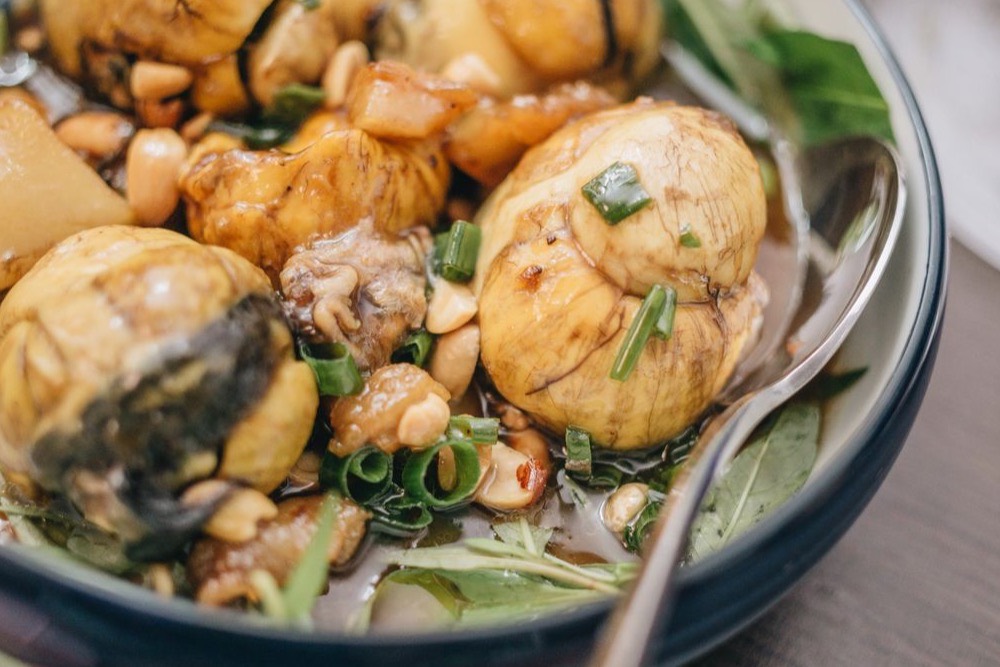
Intuitives (N) experience food through meaning and association as much as sensory pleasure. They're drawn to stories: the history of a dish, its cultural significance, the narrative behind its ingredients. An INFJ might choose Kare-Kare not just because it tastes good but because of what it represents — complex layering, depth, the slow development of something extraordinary. Intuitives are more likely to experiment with fusion dishes, seek out "concept" restaurants, and be interested in molecular gastronomy or the philosophy of food. They'll happily try Balut not because they know they'll love it but because of what trying it represents.
Thinkers vs. Feelers: The Why Behind Food Choices
Thinkers (T) approach food choices with efficiency and analysis. They've calculated the best calorie-to-satiation ratio, they know the macronutrient profile of their preferred dishes, and they have opinions on which preparations of Sisig are objectively superior and why. Thinkers often read menus analytically (ingredients, preparations, value) and may feel mildly impatient with dining companions who can't decide. They're drawn to dishes that make sense: logical combinations, clean flavors, clear craftsmanship. Kapeng Barako is a Thinker food — uncompromising, efficient, exactly what it is.
Feelers (F) make food choices based on emotional resonance. What does this dish mean to me? What memory does it evoke? How does eating it make me feel? Feelers are the ones who get genuinely emotional about their grandmother's recipes and who feel real distress when a beloved restaurant closes. They're drawn to comfort foods and dishes with strong cultural or personal meaning. They'll order the Taho or the Champorado not because it's the most sophisticated choice but because it feels like home. Feelers are also more attuned to how the people around them are experiencing the meal — they notice if someone isn't eating enough.
Judgers vs. Perceivers: Order or Adventure?
Judgers (J) value structure and planning, even at the dinner table. They research restaurants in advance, have a general idea of what they want before arriving, and prefer meals that start and end on time. In Filipino culture, Judgers are the ones who ensure the Noche Buena table is fully set, every dish is accounted for, and the food comes out in the right sequence. They tend toward food routines — the same breakfast every weekday, a reliable weekly rotation of dinner dishes. Reliability is a virtue. Pancit Canton and Adobo are quintessentially Judger foods: dependable, structured, proven over time.
Perceivers (P) eat impulsively and adventurously. They're the ones who walk past a street food stall, smell something amazing, and change their entire dinner plan on the spot. Perceivers love discovering new dishes, trying regional variations, and eating in places that weren't on the itinerary. They handle food variety well and are typically the most adventurous eaters in any group. But they also procrastinate decisions: "What do you want to eat?" answered with "I don't know, what do you want?" is a Perceiver phenomenon. Halo-Halo — the beautiful, improvised chaos — is the ultimate Perceiver food.
How This Plays Out at Filipino Family Meals
If you've ever attended a Filipino family gathering, you've witnessed every MBTI type in action simultaneously. The ESFJ aunts who spent two days cooking enough food to feed a small barangay. The INTJ uncle who quietly analyzes the Lechon technique and takes mental notes. The ENFP cousin who jumps between conversations and plates, trying everything once. The ISTJ grandparent who has eaten Adobo and rice at every family gathering for fifty years and considers this exactly correct.
Filipino food culture is the perfect environment for all types because it accommodates every relationship with food simultaneously. The table has something for the adventurous and the traditional, the communal and the private, the analytical and the emotional. The only universal requirement: you eat until you're full, then you eat a little more out of love for whoever cooked.
Finding Your Filipino Food Match
The Pinoy Food Personality Test uses the MBTI framework to match you with the Filipino dish that best represents your personality type. The matching isn't arbitrary — each pairing reflects genuine connections between the personality type's core characteristics and the dish's cultural meaning, flavor profile, and history.
If you haven't taken the test yet, discover your Filipino food personality and see which of the 16 iconic dishes represents who you are. You might be surprised how right it feels — because food and personality are connected more deeply than most of us realize.
About the author
Sam is Korean, a former MBTI skeptic, and the person who built this site. Not a professional chef or a food historian — an enthusiast who cooks the dishes, does the reading, and cross-checks the history against documented Philippine culinary sources. Corrections are welcome and get made. Read the full story.