The Ultimate Filipino Street Food Guide
From isaw to balut — the complete breakdown of what to eat, why it matters, and how to eat it right
By Sam · Published April 24, 2026
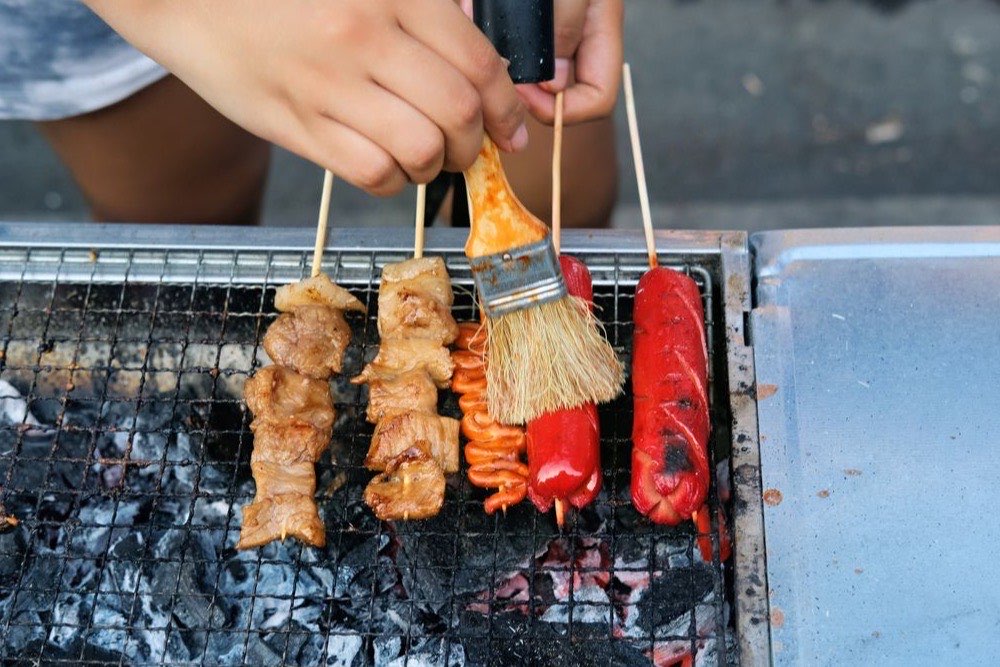
The Culture of the Sidewalk
There is a kind of food that exists only outdoors, only at the edge of a sidewalk, only eaten standing up with strangers who are briefly your neighbors in hunger. In the Philippines, this food has an entire ecosystem: the ihaw-ihaw (charcoal grill) producing columns of smoke that announce themselves from two blocks away; the kariton (wooden cart) with its bubbling oil or steaming pots; the outdoor vendor in the late afternoon sun who has been at this spot every day for twenty years and knows exactly what you want before you open your mouth. Filipino street food is not a tourist experience. It is an infrastructure of daily life.
I've eaten street food in a lot of countries. Few places do it with the same combination of casual mastery, social ease, and absolute commitment to the sawsawan (dipping sauce) as the Philippines. Every street food comes with its own sauce culture — sweet, spicy, vinegared, fermented — and the customization of your dipping sauce is treated as a matter of genuine personal expression. Nobody judges you for drowning your fishball in the sweet sauce. Nobody judges you for adding more vinegar than seems reasonable. The sidewalk is a democracy.
Isaw: The Charcoal Grill Classic
Isaw is chicken or pork intestines, cleaned, boiled, marinated, threaded onto bamboo skewers, and grilled over charcoal until the outside chars and crisps while the inside stays chewy and yielding. It is associated with a very specific smell — the particular smoke of intestines over charcoal that becomes one of the more recognizable outdoor cooking scents in any Filipino neighborhood — and a very specific experience: standing at a grill with a cup of vinegar-onion-chili sawsawan, eating quickly because isaw is best right off the fire.
The appeal of isaw to the uninitiated requires a moment of surrender. You have to let go of the fact that you know what it is and simply engage with what it tastes like: smoky, slightly funky in the way that offal always is, chewy-crispy in a way that no other food exactly replicates. Isaw is not for people who need their food to be comfortable. It is for people who trust the process and accept that the best eating experiences sometimes require a brief moment of willing suspension of squeamishness.
The social experience is as important as the taste. Isaw vendors draw crowds, and eating isaw standing in a cluster of people you may not know — all of you focused on the same grill, all reaching for the same communal sawsawan container — produces a particular sidewalk intimacy that is hard to replicate in a restaurant setting.
Balut: The Most Famous Filipino Food Experience
Balut is a fertilized duck egg, typically incubated for 17 to 21 days before being boiled and eaten. It is the most internationally discussed Filipino food — the one that appears on "world's most bizarre foods" lists, the one that non-Filipinos most frequently react to with theatrical horror, and the one that Filipinos abroad most reliably use to test new friends' adventurousness. The reputation is both accurate and dramatically overstated.
Here is what eating balut actually involves: you crack the top of the shell, drink the savory warm broth inside first (this is important — don't skip the broth), then peel the shell further and eat the contents with a pinch of salt and sometimes a dash of vinegar. The yolk is rich and custard-like. The white, if it has fully solidified, is firm and mild. The developing embryo — the part that produces the dramatic reactions — ranges from a barely-formed mass of yolk and tissue (in younger eggs) to something with discernible features (in older, 21-day eggs). Filipino vendors typically sell the 17-day version in most areas, which has less developed features and a texture more similar to a hard-boiled egg than the older version.
What balut tastes like is deeply savory duck egg, rich and complex, with a broth that is warming in a restorative way. The drama around it in international food culture reveals more about squeamishness hierarchies than about the food itself. For Filipinos, balut is a late-night snack, a street corner staple, an ordinary pleasure. The vendor's call — "Baaaluuuut!" — is the sound of Tuesday evening, not an exotic event.
Fishball and Squidball: The After-School Institution
The fishball cart outside a school gate is one of the most universal Filipino childhood memories. These small, round, pale spheres — made from processed fish paste, fried in shallow oil on a flat pan — are sold by the stick (usually five balls per stick), and the transaction involves the kind of honor system where you take your sticks, eat them, and then count and pay at the end. Nobody cheats the fishball vendor. It is an unwritten social contract maintained by an entire generation of Filipino children who grew up at these carts.
The fishball itself has a mild, slightly briny flavor with a soft, springy texture. The real flavor delivery is the sawsawan: typically two options, a sweet brown sauce made from banana ketchup and soy sauce, and a spicy vinegar-based sauce with onions and chili. The combination of the mild fishball with the aggressively flavored dipping sauce is the point. Squidball, made from squid paste, has a more distinct oceanic flavor and a slightly firmer texture. Both are eaten in quantity, standing up, in the company of other people doing exactly the same thing.
Kwek-Kwek: The Orange Egg Experience
Kwek-kwek is quail eggs coated in an orange-tinted batter made from flour, water, and achuete (annatto) for color, then deep-fried until crispy. The result is bright orange, slightly bowling-ball-shaped, and far more dramatic-looking than it sounds. The achuete gives the batter a very mild earthy flavor; the main textural pleasure is the crunch of the exterior giving way to the soft-boiled egg inside. Kwek-kwek is almost always sold at the same carts as fishballs, and the sawsawan options overlap — the spicy vinegar works particularly well with the richness of the egg.
A larger version exists using chicken eggs instead of quail eggs, sometimes called tokneneng. The experience is similar but scaled up, and the ratio of batter to egg tips differently. In the Philippines, these distinctions matter to people who have strong opinions about the correct batter thickness and the correct egg-to-coating ratio, and many people do.
Banana Cue and Kamote Cue: The Afternoon Sweet
Banana cue is saba bananas (a firmer, starchier cooking banana) deep-fried in oil with a heavy coating of brown sugar that caramelizes into a dark, glossy, crunchy shell. Served on bamboo skewers, eaten hot, they're a quintessential afternoon merienda food — the specific hunger that arrives around 3 PM, too late from lunch and too early for dinner, that demands something sweet and filling. The sugar shell shatters when you bite through it; the banana inside is soft and warm.
Kamote cue is the same concept applied to sweet potato (kamote). The starchier, drier texture of sweet potato takes the caramelized sugar differently than banana — there's less contrast between the soft interior and the crispy exterior, more of a unified dense sweetness that becomes deeply satisfying in cold or rainy weather. Both banana cue and kamote cue are fried in the same woks, often at the same cart, and choosing between them on any given afternoon is a small but genuine decision that regular customers take seriously.
Taho: The Morning Ritual
Taho is silken tofu — the softest, most delicate variety, with a texture closer to panna cotta than the firm tofu used in cooking — served warm in a cup with arnibal (a thick, dark brown sugar syrup infused with vanilla) and sago (tapioca pearls, usually small and clear or pale pink). The taho vendor carries two large aluminum canisters on a shoulder yoke — one with the warm tofu, one with the arnibal and sago — and announces himself with the call "Tahoooooo!" that echoes through residential streets in the early morning.
The ritual is specific: the vendor ladles the silken tofu into a cup, drizzles arnibal generously, adds sago, and hands it over. You eat it immediately, standing in your doorway or at the street, often still in house clothes, in the particular quiet of early morning before the day fully begins. Taho is the taste of Saturday mornings, of childhood, of the particular sensory memory that attaches itself to a specific time of day and a specific stage of life more strongly than almost any other food. Adults who have eaten taho all their lives still feel something specific when they hear the vendor's call.
Dirty Ice Cream (Sorbetes): The Cart That Comes to You
Sorbetes is pushed on a wooden or metal cart by vendors who announce their presence with a bell or by calling out. The "dirty ice cream" nickname — which Filipinos use without self-consciousness, as a term of affection rather than insult — refers to its street origins and its informal production outside the commercial cold chain, not to any actual lack of cleanliness. Sorbetes is made with coconut milk rather than dairy cream, which gives it a distinctive texture: slightly icier and lighter than American-style ice cream, with a clean coconut base that carries the flavors clearly.
The flavors are the specific Filipino lineup that doesn't exist anywhere else: ube (purple yam, the most popular), cheese (sweet cream with actual processed cheese mixed in, which sounds wrong and tastes completely right), mango, langka (jackfruit), and occasionally buko (young coconut). Sorbetes is served in a sugar cone or between two slices of pan de sal. The pan de sal option — ice cream sandwich made from a small, slightly sweet bread roll — is one of the Philippines' great casual food inventions, and eating one in the afternoon sun is a specific pleasure that anyone who has experienced it remembers for decades.
Street Food and Personality
Filipino street food is not just about eating — it is about a particular relationship with public space, with strangers, with the pleasure of unplanned experiences. The personality types in our Pinoy Food Personality Test who most naturally gravitate toward street food are the sensing and perceiving types — particularly ESFPs and ESTPs, who are drawn to immediate sensory pleasure, spontaneous social situations, and the particular energy of being present in a busy public space without a plan. These are people who slow down at an isaw grill not because they were hungry but because the smoke and the sound and the crowd pulled them in.
But street food in the Philippines is ultimately for everyone. The reserved ISTJ who normally prefers the controlled environment of a restaurant has a fishball cart memory from childhood. The INFJ who finds crowds overwhelming still buys taho from the morning vendor because the ritual is too comforting to abandon. Street food bypasses personality type and reaches something more fundamental — the specific memories and textures of a place that formed who you are. That's what good food does, wherever it's served.
About the author
Sam is Korean, a former MBTI skeptic, and the person who built this site. Not a professional chef or a food historian — an enthusiast who cooks the dishes, does the reading, and cross-checks the history against documented Philippine culinary sources. Corrections are welcome and get made. Read the full story.