The Psychology of Filipino Comfort Food
Why certain dishes feel like home — and what food memory research tells us about the connection
By Sam · Published April 28, 2026
Why Food Can Feel Like Safety
There's a moment many Filipinos — and many people who love Filipino food — have experienced: you smell something cooking, or you take a first sip of a familiar broth, and something inside you settles. Not just hunger satisfied, but something more fundamental — a sense of being located, of being in a specific place and time that is associated with safety and care. This isn't sentimentality. It's neuroscience.
The olfactory system — the brain's processing pathway for smell — has a direct anatomical connection to the hippocampus (memory formation) and amygdala (emotional processing) that other senses lack. When you smell garlic frying in the morning, or the particular tartness of simmering tamarind, your brain processes that sensory input through the same regions that store emotional memories and regulate emotional responses. The smell doesn't just remind you of a past experience — it partially reconstitutes the emotional state of that experience. This is why food memory is so different from other kinds of memory: it doesn't just recall the past intellectually, it briefly inhabits it again.
Filipino food culture, with its strong emphasis on shared meals and food as an expression of care, creates particularly rich food memories. When a Filipino child is sick and receives arroz caldo, that bowl of ginger-scented rice porridge arrives paired with parental attention, physical warmth, and the particular relief of being cared for. Decades later, arroz caldo can partially recreate that emotional state — not through nostalgic thinking but through direct neural pathways that connect the smell and taste to the stored emotional experience. The food is, in a literal neurological sense, a kind of time travel.
Sinigang as Emotional Architecture
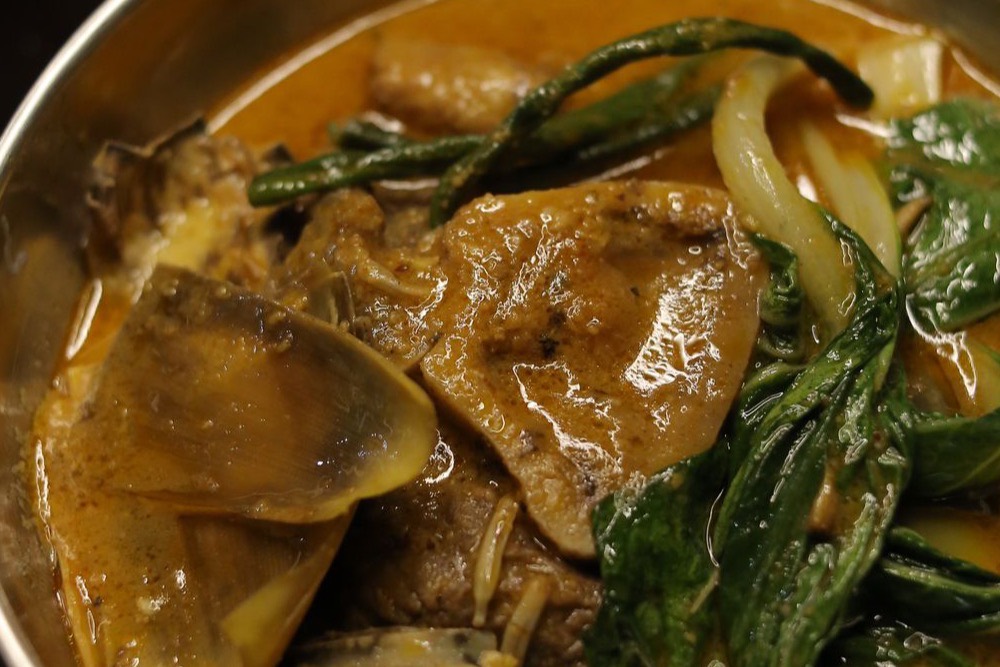
Of all Filipino comfort foods, Sinigang is the one most universally described as "tasting like home." Research on Filipino food preferences and emotional associations consistently shows Sinigang at or near the top of dishes associated with family, safety, and belonging — not just as a memory but as an active emotional trigger. Understanding why requires looking at both the sensory properties of the dish and the cultural context in which it is typically experienced.
The sourness of sinigang is neurologically significant. Sour tastes activate the somatosensory cortex more strongly than other flavors, producing a more vivid, immediately present sensory experience. The sourness wakes you up to the food in a way that mild flavors don't. But sinigang's sourness is paired with savory warmth — the combination of the broth, the meat, and the tender vegetables — that produces a complex, layered sensory experience that the brain must process rather than passively receive. Foods that require more cognitive engagement to fully process tend to form stronger memories.
The cultural context matters equally. Sinigang is disproportionately a home-cooked food — it requires time and specific ingredients and a pot large enough for a family. It is not easily replicated by street vendors or fast food. This means that most Filipinos first encountered it in a family context, and most deeply satisfying encounters with it have been in family contexts. The dish carries those associations in a way that more commercially available foods cannot.
The Rainy Day Foods: Champorado, Arroz Caldo, and Weather Memory
Filipino comfort food has a strong seasonal logic. Champorado — chocolate rice porridge — and arroz caldo — ginger chicken rice porridge — are both strongly associated with cold, rainy weather, and specifically with the Philippine wet season. This association is not arbitrary. Both dishes are warm, filling, and built around ingredients (cacao, ginger) with genuine thermogenic properties — they warm the body from within as well as providing physical warmth through their temperature.
Research in environmental psychology shows that people's food preferences are significantly influenced by weather conditions. Cold, overcast days reliably shift preferences toward warming, high-fat, high-carbohydrate foods — the same foods that many cultures have independently designated "comfort food." The Philippine wet season, with its typhoons and gray skies and weeks of rain, creates the conditions under which champorado and arroz caldo taste exactly right in a way they don't on a hot, sunny day. The memory of eating these foods during rainy childhood days becomes layered with the emotional texture of those days — the particular indoor coziness, the particular family configuration, the particular sounds of rain on a roof — until the food and the weather and the memory are inseparable.
This is why Filipino people describe champorado and rain as a pairing rather than two separate things. The food has absorbed the weather into itself through repeated association. This is also why Filipino expats in countries without wet seasons sometimes make champorado during winter rains even though the seasons don't align — the rain is close enough to activate the association.
Pasalubong and the Food of Return
The Filipino concept of pasalubong — the practice of bringing food gifts when returning home from a trip — is one of the most interesting intersections of food psychology and cultural practice in Southeast Asian culture. Pasalubong is not just a gift. It is a physical embodiment of absence and return: the traveler was away from home, now they are back, and the food they bring is evidence of where they went and proof of their continued relationship with the people they left behind.
The psychological function of pasalubong is to use food to bridge the disruption that travel creates in relationships. Time and distance are processed by the brain as threats to social bonds; the arrival of food — something nourishing, something given freely — partially resolves that threat. The person who brings back Vigan bagnet or Batangas barako coffee or Cebu dried mangoes is not just being generous; they are using the universal language of food to reestablish connection after absence. This is why pasalubong culture persists even in an era of global shipping and online purchasing: the specific act of choosing and carrying food from somewhere to someone still carries emotional weight that cannot be replicated by a delivery package.
For the Filipino diaspora, pasalubong culture takes on additional intensity. The food brought back from the Philippines — the jars of bagoong, the packets of kare-kare mix, the boxes of polvoron — is not just a gift but a piece of home itself, transported through time and space. Eating bagoong in Canada or Germany or Hong Kong, bought at a Filipino grocery store or brought back in a suitcase, produces a specific emotion that is not simply pleasure or nostalgia but something closer to temporary restoration: for the duration of the taste, the distance from home contracts.
Merienda and the Architecture of the Day
Philippine food culture includes merienda — a mid-morning and mid-afternoon snack period that structures the day. Merienda is not an optional luxury but an expected part of the daily rhythm, and its absence is noticed. From a psychological perspective, merienda performs several functions simultaneously: it maintains blood sugar levels and prevents the energy crashes that make afternoons difficult, but it also creates predictable social moments in the day — times when work pauses and people gather and share food, however briefly.
Research in organizational behavior consistently shows that shared eating — even brief, informal shared eating — improves cooperation, trust, and positive affect among groups of people. Merienda culture institutionalizes this effect. The office break room where someone brings pandesal or puto or bibingka is not just a food distribution point; it's a recurring social bonding ritual disguised as a snack break. Filipino workplaces that maintain merienda traditions report higher informal social cohesion than those that don't, though this is rarely attributed to the food practice itself.
Comfort Food and Personality Type
People differ consistently in what kinds of foods they find most comforting, and these differences correlate with personality traits in ways that food psychologists have documented. Feeling-oriented people (F types in MBTI terminology) tend to select comfort foods with stronger emotional associations — foods they ate in childhood, foods associated with specific relationships, foods that trigger clear autobiographical memories. Thinking-oriented people (T types) more often reach for comfort foods that are physiologically satisfying — calorie-dense, familiar in texture, reliably consistent in flavor — with less emphasis on emotional association and more on direct physical comfort.
In the Filipino context, this might look like: the F-type Filipino seeking their mother's specific version of Sinigang and finding commercial or restaurant versions unsatisfying in ways they can't fully articulate. The T-type Filipino equally appreciates Sinigang but is less troubled by variations, focusing more on the objective qualities of the broth and the doneness of the vegetables. Both are genuine comfort food responses; they're just operating through different psychological mechanisms.
Our Pinoy Food Personality Test builds on exactly this kind of insight — the observation that the same dish can be loved for different reasons by different people, and that the reasons tell you something real about who those people are. The INFP who gets Sinigang as their result loves it as emotional architecture. The ISTJ who gets Adobo loves it as reliable excellence. Both attachments are authentic. Both are right. Food is large enough to hold all of it.
About the author
Sam is Korean, a former MBTI skeptic, and the person who built this site. Not a professional chef or a food historian — an enthusiast who cooks the dishes, does the reading, and cross-checks the history against documented Philippine culinary sources. Corrections are welcome and get made. Read the full story.