Adobo Beyond the Basics
Why the Philippines' most iconic dish is really dozens of dishes in one
By Sam · Published April 22, 2026
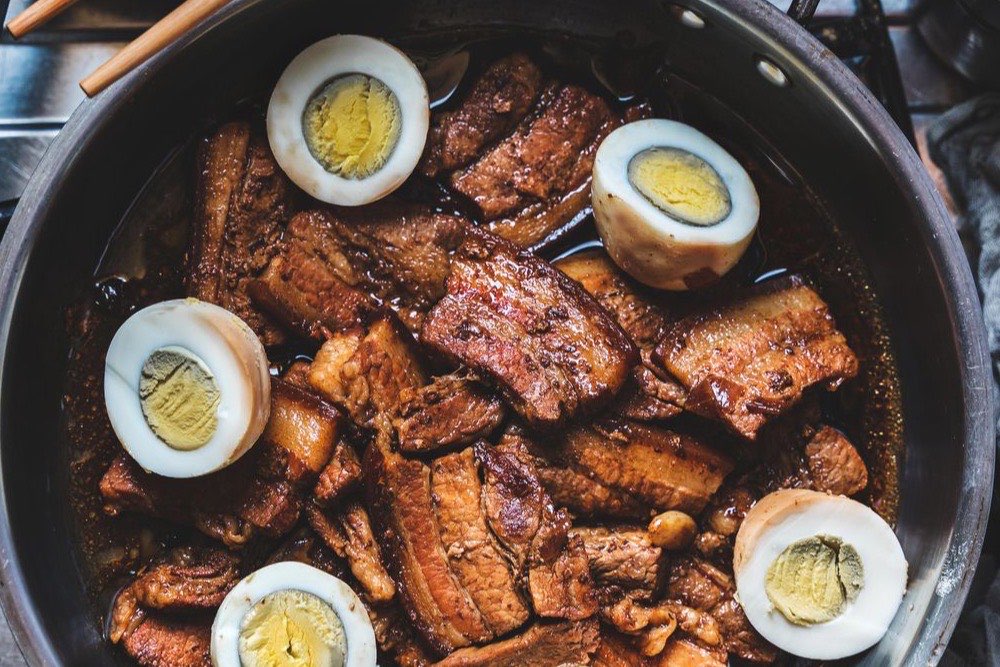
Adobo Is Not a Recipe. It's a Philosophy.
When most people outside the Philippines hear "Filipino adobo," they picture a specific thing: chicken or pork braised in soy sauce, vinegar, garlic, bay leaves, and black peppercorns, served over white rice. That dish is real, it's delicious, and it represents perhaps the most widely recognized version of adobo worldwide. But it is one point on a very wide spectrum — a single expression of a cooking approach that varies so dramatically across the Philippine archipelago that a cook from Ilocos and a cook from Batangas might each claim they make the "real" adobo while producing dishes that taste almost nothing alike.
Understanding adobo means understanding that it is first and foremost a method of preservation through acidification and reduction. The Spanish colonizers who named it "adobo" (from the Spanish word for marinade or seasoning) were actually naming something that already existed in pre-colonial Filipino cooking — the practice of braising proteins in acidic liquid, typically vinegar made from coconut, palm, or sugarcane, to preserve the meat in a hot, humid climate without refrigeration. The soy sauce that most people consider essential to adobo is a later addition, a legacy of centuries of Chinese trade and migration. In its purest pre-colonial form, adobo may have contained no soy sauce at all.
This historical depth helps explain why adobo's regional variations are so pronounced. Each region of the Philippines developed its own version of this fundamental technique based on what was locally available, what the climate demanded, and what generations of cooks decided tasted best. The result is a dish with as many faces as the archipelago has islands.
The Classic Manila Version: The Baseline
The Manila or Tagalog adobo — the one that most Filipino diaspora communities replicate and most international Filipino restaurants serve — uses the full combination: soy sauce, white cane vinegar, garlic, bay leaves, and black peppercorns. The ratio of soy to vinegar is where individual families diverge. Some prefer a saltier, more savory broth with a lower vinegar ratio; others want the sharp acidic punch of more vinegar. Some reduce the sauce completely until the chicken or pork is essentially dry-fried in its own fat and residual soy; others prefer a more saucy, stew-like consistency.
The claim that "adobo always tastes better the next day" is not myth — it's chemistry. As the dish cools and the proteins rest in the broth overnight, the acidity of the vinegar continues to work on the meat fibers, and the flavors integrate more completely. Refrigerating adobo also allows the fat to solidify on the surface, which can be skimmed or incorporated back in. Many Filipino cooks make adobo specifically to eat the following day, when it reaches its peak.
Adobo sa Puti: White Adobo
Perhaps the most striking departure from the standard version is Adobo sa Puti — "white adobo" — made with vinegar and garlic but absolutely no soy sauce. The result is a pale, almost translucent broth with a clean, pure acidic flavor unburdened by the sweetness and color of soy. This is closer to what the pre-Spanish preservation technique might have looked like: acidic braising without any East Asian influence. Adobo sa Puti is found particularly in some Visayan regions and in households where older cooking traditions have been preserved. It's a more austere flavor profile that rewards people who find the soy-based version too rich or sweet.
Batangas: Adobong Dilaw (Yellow Adobo)
Batangas province, south of Manila, is known for producing some of the most distinct regional food in Luzon, and its adobo is no exception. Adobong Dilaw — "yellow adobo" — replaces soy sauce with fresh turmeric (luyang dilaw), which gives the dish its characteristic golden yellow color and an earthy, slightly bitter aromatic quality that soy sauce cannot replicate. The resulting dish is visually dramatic: vivid golden yellow, deeply fragrant, with the same vinegar-garlic-bay leaf foundation but a completely different top note.
Batangas adobo also frequently uses talbos ng sitaw (string bean leaves) and sometimes kamias as an additional souring element. The Batangueño approach to cooking in general tends toward strong, bold flavors — their coffee is among the darkest and most robust in the country, and their adobo reflects the same unflinching intensity.
Ilocos: Dry Adobo and Adobo Flakes
The Ilocos region in northwestern Luzon has one of the most distinct food cultures in the Philippines, shaped by its cooler climate, its strong indigenous traditions, and its relative isolation from mainstream Tagalog influence. Ilocano adobo typically uses a higher ratio of vinegar and is cooked much longer than the Manila version, reducing until the liquid is almost completely gone and the meat is fried in its own fat until slightly crispy. This produces what is sometimes sold commercially as "adobo flakes" — dry, intensely savory, with concentrated flavor and a texture that is nothing like the soupy versions found elsewhere.
The dryness is functional: without moisture, bacterial growth is further inhibited, extending shelf life even further than the already-preserved wet adobo. In a region with a history of challenging conditions and the need to preserve food for long periods, this makes complete sense. Ilocano adobo flakes served over garlic fried rice is one of the great underrated Filipino breakfast experiences — the crispy, concentrated pork or chicken providing maximum flavor with minimum fuss.
Cavite: Adobo with Achuete
Cavite province, just southwest of Manila, is known for its adobo made with achuete (annatto seeds), which are steeped in oil to release their vivid orange-red pigment before the other ingredients are added. The color is striking — a deep reddish-orange that looks nothing like the brown of standard adobo. The flavor impact of achuete is subtle (it adds a slightly earthy, mildly peppery note) but the visual difference is dramatic, and the Caviteño tradition of colorful adobo reflects the province's distinct culinary identity. Some Cavite versions also reduce or eliminate soy sauce, similar to white adobo, letting the achuete color do the visual work.
Visayas: Adobo sa Gata (Coconut Milk Adobo)
In the Visayas and parts of Mindanao, coconut milk (gata) appears in the adobo — added in the final stage of cooking to create a rich, creamy sauce that mellows the sharpness of the vinegar and adds a tropical sweetness entirely absent from Luzon versions. Adobo sa Gata is simultaneously richer and softer than mainland versions, with the coconut cream carrying the flavor rather than the reduced acidic broth. It pairs particularly well with chicken, where the fat of the coconut milk complements the lighter protein.
The presence of coconut milk in Visayan cooking reflects the ecological reality of a region where coconut palms dominate the landscape and coconut products are embedded in almost every aspect of cooking. Adding gata to adobo isn't a deviation from the "true" version — it's an honest expression of what the Visayas has always had to work with.
Bicol: Spicy Adobo
Bicolanos are famous throughout the Philippines for their love of chili. The Bicol region produces some of the country's spiciest food, and adobo in Bicol frequently incorporates siling labuyo (bird's eye chili) and sometimes coconut milk as well, creating a version that is simultaneously spicy, creamy, and sour. Bicol Express — the region's most famous dish — is essentially an extreme version of this logic (pork, shrimp paste, coconut milk, and enormous amounts of chili), and Bicolano adobo sits in the same flavor family: comforting but with heat that builds and builds.
Beyond Pork and Chicken: Protein Variations
While pork and chicken are the most common adobo proteins nationally, the method works with essentially anything. Pusit (squid) adobo — where the squid ink is allowed to darken the broth — is a distinctive Visayan specialty that produces a dramatically black sauce. Kangkong (water spinach) adobo is a vegetarian adaptation where the leafy vegetable is quickly braised in a reduced adobo sauce. Sitaw (string beans) adobo is similarly popular. Tahong (mussels) adobo is made in coastal areas where the shellfish is abundant. Even tofu adobo has emerged as a vegetarian-friendly adaptation, with the tofu absorbing the vinegar-soy marinade beautifully.
What Adobo Says About Filipino Identity
The sheer diversity of Philippine adobo — the fact that the same fundamental dish looks and tastes dramatically different across regions, and that every region is convinced its version is correct — says something important about Filipino cultural identity. There is no central authority declaring one adobo authentic. Regional pride is fiercely maintained. The Manila version is not the standard from which others deviate; it's one version among many.
This mirrors a broader truth about Philippine culture: the country is not a monolith. It is a collection of distinct regional identities, languages, and traditions that share certain underlying values while expressing them in genuinely different ways. Adobo is a microcosm of this diversity — unified by technique and underlying philosophy, differentiated by the particular human and ecological conditions of each place.
In our Pinoy Food Personality Test, Adobo is paired with the ISTJ personality type — the type characterized by reliability, tradition, and a deep respect for systems that have proven themselves over time. Adobo earns this association: it is a dish that has been refined over generations, that gets better with repetition and patience, that rewards consistency and careful attention to proportions. The ISTJ's commitment to doing things properly, to honoring proven methods while adapting to practical realities, is exactly how the best adobo is made.
About the author
Sam is Korean, a former MBTI skeptic, and the person who built this site. Not a professional chef or a food historian — an enthusiast who cooks the dishes, does the reading, and cross-checks the history against documented Philippine culinary sources. Corrections are welcome and get made. Read the full story.